19+ years of experience - Comprehensive solutions supplier for mixing and packaging of powder and granular materials.


Small Bag Packing Machine
The Small Bag Packing Machine employs a vertical screw discharge mechanism, making it especially suitable for high-precision packaging of ultra-fine powders that are prone to dusting.
Constructed entirely from stainless steel, the machine meets stringent hygiene standards such as food-grade certifications, while also offering high resistance to chemical corrosion. It features automatic material-level tracking and compensation, which continuously corrects measurement errors caused by variations in material density or fill height. This ensures consistent accuracy and reliability throughout the packaging process.
Complete Powder Processing Equipment for Every Production Stage
Powder and granular material processing involves multiple interconnected operations, from raw material feeding and conveying to screening, mixing, packaging, and palletizing. We supply industrial processing equipment for individual operations and integrated production systems, helping manufacturers establish a more organized and efficient material handling workflow.
A Typical Powder and Granular Material Processing Workflow
This is a representative process flow. Actual equipment configurations depend on material characteristics, production requirements, and plant layout. Not every production line requires all processing stages.
1. Material Feeding and Conveying
The first stage of powder processing is transferring raw materials from storage, bags, or other supply points into the production system. Appropriate feeding and conveying equipment helps maintain a controlled material flow between processing units. Depending on the material and plant arrangement, mechanical conveyors, vacuum feeders, pneumatic conveying systems, and bulk bag discharge stations can be used for different transfer requirements.

2. Screening and Particle Classification
Screening equipment separates materials according to particle size and helps remove oversized particles or unwanted agglomerates before downstream processing. Linear vibrating screens and rotary vibrating screens serve different screening requirements. The appropriate equipment depends on the target particle-size range, material flow behavior, required screening capacity, and separation accuracy.

3. Powder and Granular Material Mixing
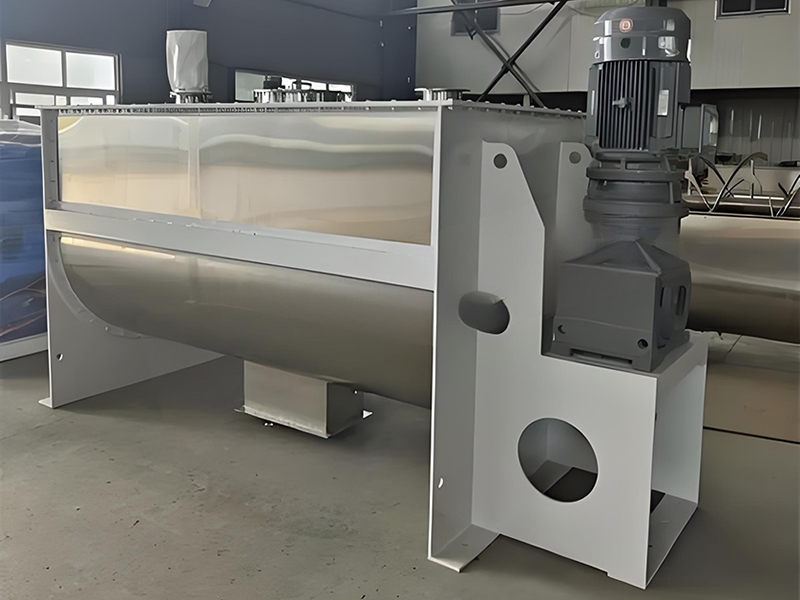
Mixing is a critical processing stage when manufacturers need to combine multiple ingredients into a consistent formulation. Different mixer structures create different material movement patterns. Horizontal ribbon mixers are commonly used for general powder blending, while ploughshare mixers and paddle mixers provide alternative mixing actions for specific material conditions. V-type and cone mixers use tumbling movement for suitable dry materials. Continuous mixers support production processes requiring uninterrupted feeding and discharge.
4. Automatic Packaging and Palletizing
After processing, finished powders and granules can be transferred to weighing and packaging equipment. Valve bag packing machines and open-mouth bagging machines accommodate different packaging formats and material characteristics. Downstream conveyors, automatic palletizing systems, pallet wrapping machines, and stretch hooders can further organize finished products for storage and transportation.

How to Select the Right Powder Processing Equipment
Selecting industrial powder processing equipment requires more than comparing machine models. Material properties, production capacity, processing objectives, operating conditions, and equipment compatibility all influence the final configuration. Understanding these factors helps manufacturers choose equipment that matches their actual production requirements.
1. Evaluate Material Characteristics
Different powders and granules behave differently during feeding, conveying, mixing, and packaging. Fine powders may generate airborne dust or form cohesive agglomerates, while coarse granules may be vulnerable to segregation or particle damage during handling. Hygroscopic materials can absorb moisture and develop flow problems, while abrasive materials may accelerate wear on product-contact components.
| Material Factor | Why It Matters | Equipment Consideration |
|---|---|---|
| Particle Size | Influences screening, flow, and segregation. | Screen mesh, feeding structure, and conveying method. |
| Bulk Density | Affects equipment loading and material volume. | Mixer working volume, feeder capacity, and weighing configuration. |
| Moisture Content | Can influence flowability, adhesion, and agglomeration. | Feeding design, cleaning access, and material handling method. |
| Abrasiveness | May accelerate wear on contact surfaces. | Wear-resistant materials and replaceable components. |
| Hygroscopicity | Can cause moisture absorption and material caking. | Enclosed handling and suitable environmental protection. |
| Flowability | Determines how consistently materials discharge. | Hopper geometry, feeding mechanism, and discharge configuration. |
2. Match the Equipment to the Processing Objective
Each processing operation requires a different equipment principle. A screening machine cannot replace a mixer, and a conveying system does not perform the same function as a weighing and filling machine. Identifying the exact purpose of each operation is the foundation of a practical equipment selection strategy.
Material Transfer
Consider screw conveyors, vacuum feeders, bucket elevators, and pneumatic conveying systems according to transfer distance, elevation, material behavior, and layout.
Particle Separation
Select linear or rotary vibrating screens based on screening purpose, material characteristics, required separation, and production conditions.
Material Blending
Compare ribbon, ploughshare, paddle, cone, and continuous mixers according to blending requirements and batch or continuous production methods.
Packaging and Handling
Match valve bag or open-mouth packaging equipment to the bag format, material flow, weighing requirements, and downstream palletizing process.
3. Consider Production Capacity and Factory Layout
Production capacity should be evaluated across the entire processing line rather than by looking at the rated capacity of an individual machine. Differences between feeding rates, mixing cycles, conveying speeds, screening capacity, and packaging output can create bottlenecks. Available installation space, equipment height, maintenance access, material transfer distances, and connection points should also be considered before finalizing the equipment arrangement.
Integrated Powder Processing and Material Handling Solutions
Individual machines perform specific processing functions, while an integrated production line connects these operations into a coordinated workflow. We provide equipment covering multiple stages of powder and granular material processing, supporting manufacturers who need to configure new production lines or improve existing facilities.
Coordinating Equipment Across Production Stages
A complete powder processing line requires coordination between upstream and downstream equipment. Feeding systems should supply materials consistently, screening equipment should match the required particle separation, and mixers should receive the appropriate material quantities. At the packaging stage, filling and weighing operations need to work with the available conveying and palletizing equipment.
Typical Equipment Combinations for Different Production Requirements
| Production Objective | Potential Equipment Combination | Main Function |
|---|---|---|
| Powder Blending Line | Feeding System + Ribbon Mixer + Discharge Conveyor | Controlled ingredient feeding and powder blending. |
| Granular Material Processing | Bucket Elevator + Vibrating Screen + Conveyor | Material elevation, screening, and transfer. |
| Powder Packaging Line | Storage Hopper + Feeding System + Valve Bag Packing Machine | Material supply, weighing, and bag filling. |
| Automated Bag Handling | Bagging Machine + Conveyor + Automatic Palletizing Line + Stretch Hooder | Finished bag transfer, stacking, and load stabilization. |
These combinations are representative configurations, not fixed standard production lines. Actual equipment selection and integration depend on material properties and production conditions.
Equipment Compatibility and Process Coordination
When several machines operate in one production line, their interfaces and operating sequences need to be considered together. Material discharge heights, inlet and outlet dimensions, conveying capacity, feeding stability, and control signals can all affect the overall operation.
Our equipment range covers material feeding, conveying, screening, mixing, packaging, and palletizing. We can evaluate the relationship between these processing stages when planning suitable equipment configurations for powder and granular material production.
What to Consider When Purchasing Industrial Powder Processing Equipment
For industrial buyers, equipment purchasing involves more than comparing initial prices. A suitable machine must match the actual production process, material characteristics, operating environment, and long-term maintenance requirements. Evaluating these factors before procurement can help reduce integration difficulties and unnecessary operating costs.
Verify Material Compatibility
Review particle size, bulk density, moisture, abrasiveness, corrosiveness, and flow characteristics. Confirm that the equipment structure and material-contact components are suitable for the materials being processed.
Review Technical Specifications
Compare working volume, feeding capacity, processing method, power requirements, discharge configuration, and other relevant specifications. Ensure that quoted specifications correspond to the actual equipment configuration.
Check Manufacturing and Quality Control
Evaluate fabrication quality, welding, surface finishing, assembly, electrical components, and inspection procedures. Request relevant inspection documentation when required by the purchasing specification.
Evaluate Installation and Maintenance
Consider installation dimensions, equipment access, cleaning requirements, wear components, maintenance intervals, and the availability of replacement parts.
Assess Production Line Compatibility
Confirm that the selected machine can connect with upstream and downstream equipment. Pay attention to material transfer points, structural dimensions, operating sequences, and control interfaces.
Compare Long-Term Operating Costs
Consider energy consumption, labor requirements, cleaning time, spare parts, wear, and maintenance. A machine with a suitable operating configuration can offer better long-term value than one selected solely by its purchase price.
Explore Our Powder Processing Equipment Categories
Explore our four main equipment categories to learn more about the available machine types, technical characteristics, and processing applications.
Mixing Equipment
Industrial mixers for powder blending, granular material mixing, and continuous processing.
Explore Mixing Equipment →Conveying & Feeding Systems
Material feeding and transfer equipment for powder and granular production processes.
Explore Conveying Systems →Screening Equipment
Vibrating screening machines for particle separation, material grading, and screening operations.
Explore Screening Equipment →Packaging and Palletizing Equipment
Automated bag filling, packaging, palletizing, and finished-product stabilization equipment.
Explore Packaging Equipment →Frequently Asked Questions About Powder Processing Equipment
Find practical answers to common questions about industrial powder processing equipment, machine selection, production line integration, technical specifications, and equipment procurement.
1. Which powder processing equipment do I need for a new manufacturing production line?
The required equipment depends on the production process and the characteristics of the materials being handled. A typical powder processing line may include raw material unloading, feeding, conveying, screening, mixing, weighing, packaging, and palletizing equipment. However, not every project requires all these operations. For example, a facility producing blended dry powders may prioritize a feeding system, ribbon mixer, and packaging machine, while a facility handling bulk granules may require elevators, screening machines, and conveyors. We provide equipment covering multiple processing stages, allowing suitable machines to be selected according to the actual production workflow.
2. How should I choose between a ribbon mixer, ploughshare mixer, and V-type mixer for industrial powder blending?
The choice depends on material flowability, cohesion, particle characteristics, liquid addition requirements, and the desired mixing action. A ribbon mixer uses inner and outer helical ribbons to create axial and radial material movement and is widely used for general powder blending. A ploughshare mixer uses plough-shaped mixing elements to generate intensive material movement and can accommodate various powder and granular processing conditions. A V-type mixer relies on tumbling movement and is commonly considered for dry, free-flowing materials requiring relatively gentle blending. Before selecting a machine, evaluate the actual recipe, batch size, required uniformity, and cleaning requirements.
3. Should I use pneumatic conveying or mechanical conveying for fine powder materials?
Both methods can be suitable, but they serve different material handling conditions. Pneumatic conveying transports materials through enclosed pipelines using airflow and is useful when flexible routing, vertical transfer, or enclosed material movement is required. Mechanical conveying equipment, such as screw conveyors and bucket elevators, transfers materials through mechanical movement and can be suitable for defined horizontal or vertical conveying routes. Fine powders may require particular attention to dust containment, air velocity, particle degradation, and material separation. The final choice should consider conveying distance, required capacity, material density, moisture, abrasiveness, and operating energy consumption.
4. What is the difference between a linear vibrating screen and a rotary vibrating screen?
A linear vibrating screen uses linear vibration to move materials along the screen surface, making it suitable for continuous conveying and screening operations. A rotary vibrating screen uses circular or three-dimensional vibration to separate particles according to screen openings and is commonly considered for fine powder screening and grading. Their screening movement, material residence behavior, installation arrangements, and applicable operating conditions differ. Buyers should compare the required separation size, material flow characteristics, screening capacity, number of screening layers, and cleaning requirements before choosing a machine.
5. How can I reduce dust during powder feeding and transfer between processing machines?
Dust control should be considered at material unloading points, transfer connections, feeding stations, and equipment discharge outlets. Enclosed conveying systems, properly designed feeding stations, sealed connections, and suitable dust extraction arrangements can help reduce uncontrolled powder release. Vacuum feeders and pneumatic conveying systems can be considered where enclosed material transfer is required. However, dust collection capacity and equipment configuration must match the actual material characteristics and operating conditions. Fine powders, combustible dusts, and potentially hazardous materials may also require additional engineering risk assessments and suitable protection measures.
6. Which factors should I consider when selecting a powder packaging machine for different bag types?
Bag construction, filling method, material flowability, target filling weight, sealing requirements, and production speed are important selection factors. Valve bag packing machines are designed for valve-type bags and are commonly used for dry powders and granular materials. Open-mouth bagging machines accommodate open-top bags and can be combined with sewing or heat-sealing equipment depending on the packaging material. Small bag packing machines serve different package size and dosing requirements. Before purchasing, verify bag dimensions, filling openings, material characteristics, weighing accuracy, sealing arrangements, and downstream conveying compatibility.
7. How do I match the capacity of a powder mixer with the feeding and packaging equipment?
Production line capacity should be calculated by considering actual material throughput, mixer working volume, batch cycle time, feeding rate, discharge time, and packaging output. For batch mixing, the effective production capacity depends on the quantity processed per batch and the complete operating cycle rather than nominal container volume alone. For continuous mixing, feeding stability and residence time become particularly important. Downstream packaging equipment must also be able to handle the material output without creating accumulation or interruptions. We recommend evaluating the complete process sequence instead of selecting individual machines independently.
8. What should industrial buyers check before importing powder processing machinery from a manufacturer?
Buyers should review the equipment's technical configuration, material compatibility, manufacturing quality, electrical requirements, dimensions, installation conditions, and spare parts arrangements. It is also important to confirm the scope of supply, control system configuration, inspection procedures, packaging method, and transportation arrangements. For integrated projects, check whether all machines have compatible interfaces and whether the proposed process sequence is practical. Requesting equipment drawings, technical specifications, and relevant inspection information before order confirmation helps reduce misunderstandings during manufacturing and installation.
9. What stainless steel material should I consider for powder mixing and processing equipment?
Stainless steel selection depends on product-contact conditions, corrosion risks, cleaning requirements, and applicable industry requirements. Grade 304 stainless steel is commonly used for many general industrial and food-related equipment applications, while 316L may be considered when greater resistance to certain corrosive environments is required. However, neither grade is universally suitable for every material or chemical environment. Surface finish, welding quality, cleaning procedures, and other contact materials should also be evaluated. We offer different mixer construction and material configurations according to the equipment design and applicable processing requirements.
10. Can CSP provide equipment configurations for both individual machines and integrated powder processing projects?
Yes. We supply powder and granular material processing equipment covering feeding, conveying, screening, mixing, packaging, and palletizing operations. Customers can explore individual machines for specific production requirements or consider combinations of equipment for broader processing workflows. Our experience in powder and granular material processing allows us to evaluate equipment relationships and production line arrangements. The final configuration depends on the material characteristics, required process operations, production capacity, factory layout, and technical specifications of the project.