19+ years of experience - Comprehensive solutions supplier for mixing and packaging of powder and granular materials.


Bucket Elevator
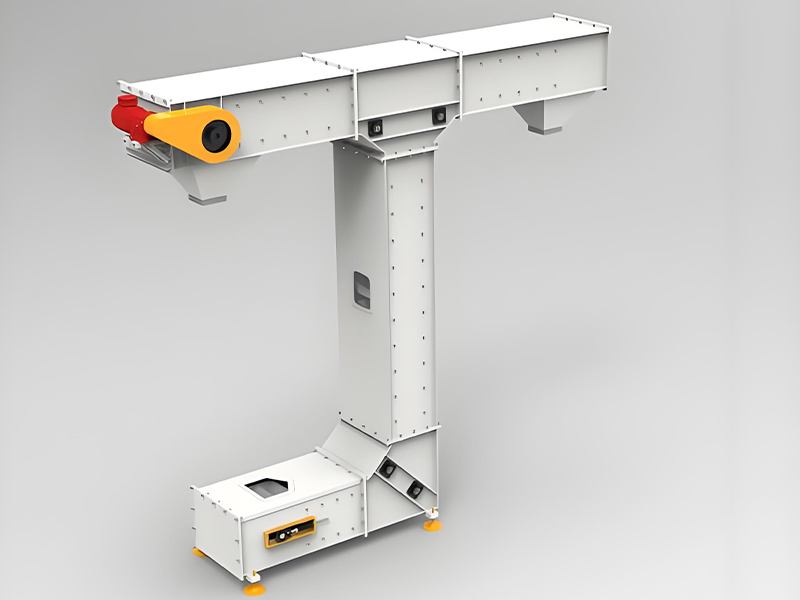
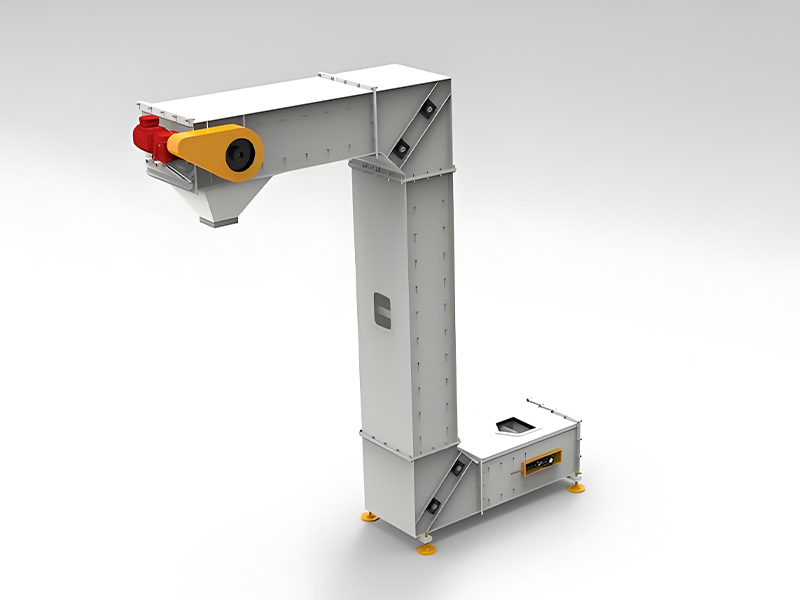
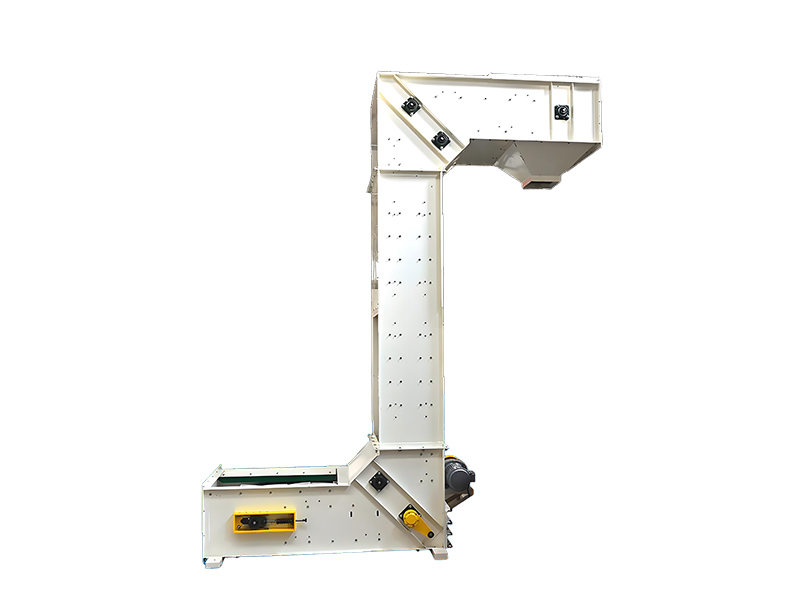
This bucket elevator is designed to efficiently handle powders, granules, and sticky materials, combining both vertical lifting and horizontal conveying functions in a single unit. It effectively replaces the traditional combination of a vertical elevator and a belt conveyor, making it an ideal solution for facilities with limited space or multi-level production layouts.
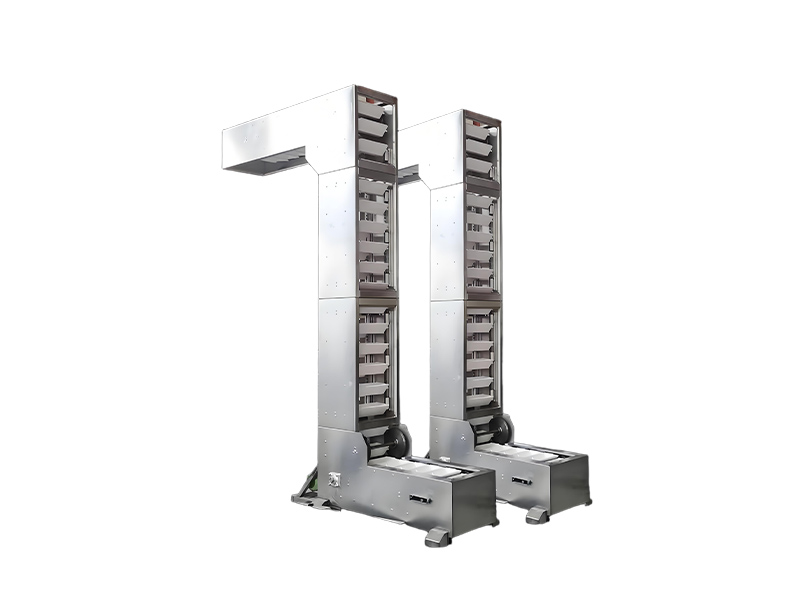
It utilizes shallow buckets and uniform conveying technology to minimize material breakage caused by collision or friction, maintaining a breakage rate below 0.5%. This makes it particularly suitable for industries such as food and chemicals, where preserving material integrity is essential. The elevator supports both single-point and multi-point discharge.
A variety of material options are available to suit different handling requirements: buckets can be made of carbon steel, stainless steel, or plastic, while the casing can be constructed from carbon steel, galvanized sheet, or stainless steel frame. The elevator features a compact structure and small footprint, offers a large conveying angle, and supports vertical or inclined transport. Its fully enclosed design effectively contains dust, ensuring compliance with environmental standards. Additionally, the system operates smoothly with low noise levels, contributing to a more comfortable and productive working environment.
How Industrial Powder Conveying and Feeding Systems Work
An efficient powder conveying and feeding system connects raw material receiving, controlled feeding, material transfer, and downstream processing. We provide different conveying equipment to help integrate these stages into a practical bulk material handling workflow.
Raw Material Receiving
Bulk bags, small bags, and stored materials enter the production process.
Feeding & Unloading
Feeding stations and big bag discharge equipment introduce materials into the line.
Material Conveying
Mechanical or pneumatic equipment transfers materials to the next process.
Processing & Packaging
Materials are delivered to screening, mixing, storage, or packaging equipment.
The actual equipment arrangement depends on material characteristics, process requirements, and plant layout.
In a powder processing plant, conveying and feeding are closely connected but serve different purposes. Feeding equipment introduces material into a process at the required point, while conveying equipment transfers it between storage, processing, and packaging stages. A well-planned system considers both functions together rather than selecting each machine independently.
We focus on equipment for powder and granular material handling, including bag unloading, dust-controlled feeding, mechanical conveying, pneumatic conveying, and vertical material lifting. These equipment types can be selected according to the actual production workflow.
Types of Industrial Powder Conveying and Feeding Equipment
Different conveying technologies solve different material handling challenges. Understanding their working methods and application requirements helps you identify the appropriate equipment for your production line.
Pneumatic Conveying System
Uses airflow to transport powders and granular materials through enclosed pipelines. It supports horizontal, vertical, and inclined conveying arrangements.
Consider when:
Your plant requires pipeline-based material transfer and a flexible conveying route.
Vacuum Feeder
Uses negative pressure to draw powder or suitable granular materials through a suction hose into a receiving hopper, where air and material are separated.
Consider when:
You need enclosed powder transfer between relatively close process points.
Dust-Free Feeding Station
Combines manual bag opening, feeding, dust collection, and integrated screening to help control dust during small and medium-sized bag handling.
Consider when:
Operators need to introduce bagged powder into a processing line.
Screw Conveyor
Uses a rotating helical screw blade inside a casing to move bulk materials along a defined route. It is commonly used for horizontal and inclined transfer.
Consider when:
You need enclosed mechanical conveying between adjacent equipment or process stages.
Tubular Chain Conveyor
Uses a moving chain and conveying discs inside a tubular enclosure to transfer bulk materials through continuous horizontal, inclined, and vertical routes.
Consider when:
Your layout requires a continuous enclosed conveying path with multiple directional changes.
Bucket Elevator
The CSPMAC Z-type bucket elevator combines horizontal conveying and vertical lifting through a continuous bucket arrangement.
Consider when:
You need to transfer granular or powder materials between different production levels.
Big Bag Discharge Station
Receives bulk bags and provides a controlled discharge point for transferring stored powder or granular materials to downstream equipment.
Consider when:
Your operation uses ton bags or flexible intermediate bulk containers as raw material packaging.
Powder Conveying Equipment Comparison for Industrial Applications
Compare the basic working methods and typical application roles of different material conveying and feeding machines before selecting equipment for your facility.
| Equipment | Working Method | Main Process Role | Important Selection Factor |
|---|---|---|---|
| Pneumatic Conveying | Airflow through pipelines | Enclosed bulk transfer | Air requirements, material properties, route length |
| Vacuum Feeder | Negative-pressure suction | Powder pickup and feeding | Suction distance, material flowability, capacity |
| Dust-Free Feeding Station | Manual feeding with dust extraction and screening | Bag opening and material introduction | Bag size, dust characteristics, screening requirements |
| Screw Conveyor | Rotating helical screw | Mechanical bulk transfer | Material flowability, inclination, screw design |
| Tubular Chain Conveyor | Moving chain and conveying discs | Enclosed continuous transfer | Pipeline configuration, material properties, wear |
| Bucket Elevator | Moving buckets on a closed track | Vertical lifting and horizontal transfer | Lifting height, conveying distance, particle integrity |
| Big Bag Discharge Station | Controlled bulk bag unloading | Raw material receiving and discharge | Bag dimensions, material discharge behavior, dust control |
This comparison describes general equipment functions. Actual capacity, operating conditions, and equipment configuration must be confirmed according to the material and project specifications.
Z-Type Bucket Elevator for Combined Horizontal and Vertical Conveying
Our Z-type bucket elevator integrates horizontal material transfer and vertical lifting in one enclosed conveying arrangement. It is designed for facilities where production equipment is installed at different heights or where floor space needs to be used efficiently.
The Z-shaped conveying route combines horizontal feeding, vertical elevation, and upper-level discharge. This arrangement can replace a separate vertical elevator and horizontal conveyor combination in suitable production layouts.
The equipment uses shallow buckets and controlled conveying movement to reduce material impact during transfer. CSPMAC's product information states a material breakage rate below 0.5% for the described configuration. Actual performance depends on the material, operating conditions, and equipment configuration.
We offer different bucket and casing material options, including carbon steel, stainless steel, and plastic selections according to the product page. The appropriate construction should be determined by material properties, hygiene requirements, and operating conditions.
Where Can a Z-Type Bucket Elevator Be Used?
- Transferring granular ingredients from ground-level feeding equipment to an elevated mixer inlet.
- Moving materials between different production floors in multi-level processing facilities.
- Feeding downstream storage bins, hoppers, or other processing equipment.
- Handling suitable products where minimizing material impact during conveying is important.
Key Factors When Selecting Powder Conveying Equipment
Reliable bulk material handling begins with understanding the material and production environment. Equipment selection should consider more than nominal conveying capacity, because powder behavior, plant layout, and downstream process requirements all affect system performance.
Material Flowability and Particle Characteristics
Bulk density, particle size distribution, particle shape, moisture content, cohesiveness, and abrasiveness influence how a material behaves during conveying. Free-flowing granules may be suitable for several mechanical conveying methods, while fine or cohesive powders may require more attention to feeding stability, hopper geometry, and dust containment. Material testing or representative operating data helps reduce the risk of selecting an unsuitable conveying method.
Conveying Distance and Route Configuration
The distance between the material source and receiving equipment, together with the number of horizontal sections, vertical lifts, and directional changes, determines the mechanical layout or pneumatic system requirements. A screw conveyor may be appropriate for a defined mechanical route, while a tubular chain conveyor or pneumatic conveying system may be considered when the layout requires more complex routing.
Dust Control and Material Containment
Fine powders can become airborne during bag opening, transfer, and discharge. Enclosed conveying equipment, suitable extraction arrangements, properly designed connection points, and accessible cleaning areas help manage dust release. The appropriate approach depends on the powder's characteristics, the plant's ventilation arrangement, and any applicable process safety requirements.
Material Integrity and Contamination Prevention
Some granular products are sensitive to impact, friction, or excessive mechanical handling. In these cases, the conveying mechanism, operating speed, transfer height, and discharge arrangement should be evaluated. For food, pharmaceutical, and other hygiene-sensitive applications, contact materials, surface finish, cleaning access, and cross-contamination controls also require consideration.
Capacity and Downstream Equipment Compatibility
A conveying system should deliver material at a rate that matches the receiving equipment's actual demand. The operating rate of the conveyor, buffer hopper volume, feeder discharge behavior, and downstream mixer or packaging machine cycle should be considered together. A mismatch between upstream feeding and downstream consumption can result in material accumulation, interrupted production, or unstable operation.
Cleaning, Inspection, and Maintenance Access
For production lines that handle different materials, cleaning and changeover requirements can be as important as initial equipment capacity. Inspection covers, accessible filters, suitable discharge points, replaceable wear components, and maintenance clearance help support routine operation. Material residue and dust accumulation should be considered during the equipment layout stage rather than after installation.
Integrating Conveying and Feeding Equipment into Powder Processing Lines
Conveying equipment works most effectively when it is planned as part of the complete production process. Feeding, transfer, screening, mixing, and packaging operations should be coordinated to maintain material flow between processing stages.
Example Powder Processing Workflow
This is an illustrative process arrangement. Actual equipment combinations and operating sequences depend on the production requirements.
For example, a facility handling raw materials in ton bags may use a Big Bag Discharge Station as the receiving point. A suitable screw conveyor or pneumatic conveying system can then transfer material to a storage hopper or mixer. If the production line includes equipment installed on an upper platform, a Z-type bucket elevator may be considered for vertical and horizontal transfer.
We also provide mixing, screening, packaging, and palletizing equipment within our broader powder and granular material processing portfolio. Coordinating the conveying stage with downstream machinery helps establish a more practical production line layout.
Frequently Asked Questions About Industrial Conveying and Feeding Systems
Explore practical answers to common equipment selection, powder handling, installation, and purchasing questions for industrial conveying and feeding applications.
1. Which conveying equipment should you choose for transferring fine powder between two production floors?
The choice depends on the powder's flowability, conveying distance, elevation difference, required throughput, and dust containment requirements. A vacuum feeder may be suitable for relatively short-distance enclosed powder transfer, while a pneumatic conveying system may be considered for a larger pipeline-based conveying arrangement. A screw conveyor or tubular chain conveyor may be more appropriate when mechanical conveying is preferred. For suitable granular materials and a layout that combines horizontal and vertical movement, a Z-type bucket elevator is another option. Before selecting equipment, evaluate the actual material behavior and the available installation space.
2. What is the difference between a vacuum feeder and a pneumatic conveying system for powder handling?
Both technologies use airflow, but they serve different equipment roles and system requirements. A vacuum feeder uses negative pressure to draw material into a receiving hopper and is commonly applied to enclosed powder pickup and feeding. A pneumatic conveying system is a broader pipeline transport arrangement that uses airflow to move materials between designated process points. The selection depends on transfer distance, capacity, pressure arrangement, material properties, and the number of receiving locations. A vacuum feeder should not automatically be treated as a substitute for every type of pneumatic conveying system.
3. When should a manufacturer use a dust-free feeding station instead of a big bag discharge station?
Choose according to the packaging format and material receiving process. A dust-free feeding station is intended for operators to open and feed small or medium-sized bags. It combines a feeding area with dust extraction and screening functions to help capture dust and intercept oversized particles. A big bag discharge station is designed to receive larger flexible bulk bags and discharge their contents into downstream equipment. If your factory handles both packaging formats, the two machines may serve different stages or raw material categories within the same production facility.
4. Is a screw conveyor suitable for handling cohesive or moisture-sensitive powder?
Not every screw conveyor is suitable for cohesive or moisture-sensitive materials. Moisture can cause powder to agglomerate or adhere to the screw flight and casing, potentially leading to material buildup, irregular feeding, or blockage. Material properties such as moisture content, particle size, cohesiveness, abrasiveness, and temperature should be evaluated before selecting the screw configuration. CSPMAC's screw conveyor product information also identifies perishable, viscous, and easily agglomerated materials as unsuitable applications. Where material behavior is uncertain, representative material testing is recommended before finalizing the design.
5. Can a Z-type bucket elevator help reduce damage to fragile granular materials?
The CSPMAC Z-type bucket elevator uses shallow buckets and controlled conveying movement to reduce material impact during transfer. Its design is intended to help preserve particle integrity while combining horizontal and vertical conveying. The product page states a breakage rate below 0.5% for the described configuration. However, the actual result can vary according to particle characteristics, material loading, operating speed, transfer conditions, and equipment configuration. For fragile granules, it is important to assess the material's sensitivity to impact and friction rather than relying on the equipment type alone.
6. How do you select conveying equipment when the available factory installation space is limited?
Start by mapping the available floor space, equipment elevations, existing structures, and the positions of material inlets and outlets. A Z-type bucket elevator can combine horizontal and vertical conveying in suitable layouts, potentially reducing the need for separate machines. A vacuum feeder may be considered for compact enclosed powder transfer, while tubular chain conveyors and pneumatic conveying systems may offer alternative routing arrangements. The final choice should also account for maintenance clearance, access to inspection points, cleaning requirements, and the height of downstream receiving equipment.
7. What should food and pharmaceutical manufacturers check when purchasing powder feeding equipment?
Important considerations include material contact construction, surface finish, equipment accessibility, cleaning procedures, dust containment, and the risk of cross-contamination between product batches. The design should match the manufacturer's hygiene and process requirements. Stainless steel may be considered where its corrosion resistance and cleaning characteristics are suitable, but the material grade and finish must be confirmed for the actual application. Buyers should also verify whether the proposed equipment can be inspected and cleaned efficiently during routine changeovers. Any required hygienic design standards or certifications must be confirmed with the supplier rather than assumed.
8. How can you maintain stable material feeding when a conveyor supplies a mixer or packaging machine?
The feeding and receiving equipment must be coordinated according to actual production demand. Check whether the conveyor's delivery rate matches the downstream machine's consumption rate, whether a buffer hopper is required, and whether the material can flow consistently through the inlet and discharge points. Changes in bulk density, moisture, particle size, and material flowability can affect feeding behavior. Depending on the process, variable-speed control, level monitoring, or weighing feedback may help regulate material supply. The control method should be selected according to the required dosing accuracy and process complexity.
9. What information should you verify before placing a bulk order for industrial conveying equipment?
For a multi-machine purchase, review the equipment model, material contact parts, construction materials, operating capacity, motor and power requirements, inlet and outlet dimensions, installation layout, and connection interfaces. Confirm that the equipment specifications are compatible with upstream and downstream machinery. For multiple production lines, consistent technical documentation, spare part identification, inspection procedures, and maintenance arrangements are also important. Requesting clear equipment drawings and confirming the final configuration before manufacturing can help reduce installation and commissioning issues.
10. Can conveying and feeding equipment be integrated with an existing powder mixing and packaging production line?
Yes, conveying and feeding equipment can be considered as part of an existing production line, provided that the mechanical interfaces, process capacity, electrical control, installation space, and material characteristics are compatible. A retrofit project should begin with an assessment of the existing material flow, equipment connection points, and bottlenecks. We provide a broader range of powder and granular processing equipment, including conveying, mixing, screening, and packaging machinery. The appropriate equipment combination and integration arrangement should be confirmed according to the actual production process and technical requirements.
Explore Our Conveying and Feeding Equipment
Explore the individual equipment categories to learn more about their working principles, configurations, and industrial applications.